
Bitcoin Slides Near $80,000 Amid Tech Earnings and Anticipated Inflation Data
Bitcoin price reaction
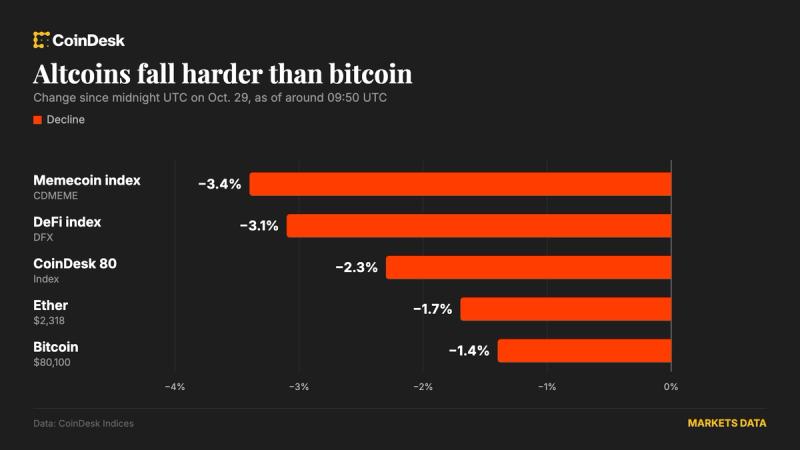
On October 29, 2026, Bitcoin fell about 1.4% since midnight UTC, trading near $80,100. The dip coincided with weaker-than-expected earnings reports from two major technology companies, Samsung and Alphabet, which pressured broader tech equities. While the cryptocurrency market often moves independently of traditional stocks, the recent sell‑off suggests a short‑term correlation between investor sentiment in the tech sector and Bitcoin’s price.
Key drivers behind the move
The immediate catalyst appears to be the earnings disappointment from Samsung and Alphabet. Both firms reported results that fell short of analyst expectations, prompting a pullback in technology‑heavy indices. Because many Bitcoin investors also hold equity positions in large‑cap tech firms, a decline in those stocks can lead to a reallocation of capital away from riskier assets, including digital currencies.
In addition, market participants are awaiting the release of the Federal Reserve’s preferred inflation gauge later today. The gauge is closely watched for clues about the Fed’s future monetary policy stance. If the data signals persistent inflation, investors may anticipate tighter policy, which historically has weighed on risk assets such as Bitcoin.
AI tokens experience a slump
Alongside Bitcoin’s modest decline, tokens tied to artificial‑intelligence projects also saw price pressure. The article notes a “slump” in AI tokens but does not provide specific price levels or percentage moves. This lack of detail makes it difficult to gauge the breadth of the downturn across the AI‑focused segment of the crypto market.
Broader market context
Bitcoin’s price has historically shown sensitivity to macro‑economic signals, including interest‑rate expectations and inflation data. The current environment features heightened uncertainty as the Fed’s upcoming inflation reading could influence the trajectory of monetary policy. A higher‑than‑expected inflation figure might reinforce expectations of continued rate hikes, which could further dampen appetite for speculative assets.
Conversely, a lower inflation reading could ease concerns about aggressive tightening, potentially stabilizing or even supporting Bitcoin’s price. However, the interplay between tech earnings, macro data, and crypto markets remains complex, and short‑term price movements can be driven by a mix of sentiment, liquidity flows, and algorithmic trading.
Risks and unanswered questions
Investors should consider several risk factors:
- Liquidity shifts: A sell‑off in equities may trigger broader risk‑off behavior, reducing liquidity for Bitcoin and other cryptocurrencies.
- Inflation data impact: The exact effect of the Fed’s inflation gauge on crypto markets is uncertain until the data is released and market participants interpret it.
- AI token volatility: Without precise figures, it is unclear whether the AI token slump reflects a temporary correction or a more sustained shift in investor interest.
Key questions for readers include: How will the upcoming inflation report shape expectations for future Fed policy? Will the tech earnings disappointment have a lasting impact on crypto sentiment, or is the reaction likely to be short‑lived? And what factors might drive the performance of AI‑related tokens moving forward?
What to watch next
Market participants will be monitoring the Fed’s inflation release, subsequent statements from Federal Reserve officials, and any follow‑up guidance from Samsung and Alphabet. In the crypto space, price action in Bitcoin and AI tokens over the next 24‑48 hours will provide early signals of how these macro and sector‑specific developments are being digested.
Source: Bitcoin drops to $80,000 on Fed dissent, Samsung, Alphabet earnings; AI tokens slump


Comments
Post a Comment