
Governance Weaknesses in X100 Lead to $6 Million Flash‑Loan Exploit
What happened?
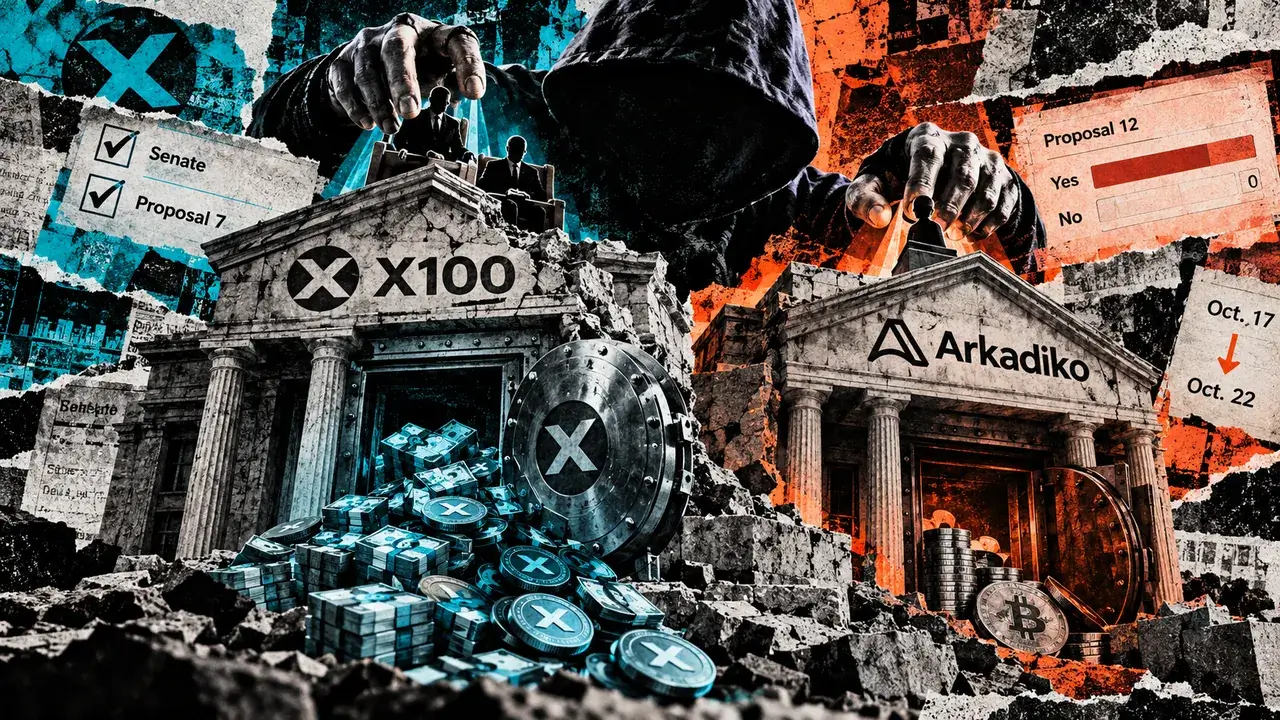
A recent incident involving the X100 protocol resulted in a loss estimated at roughly $6 million. According to the report, an attacker used a flash loan to obtain funds, then repaid the loan using the proceeds of the theft while the original stake used to secure the loan remained locked. In parallel, a governance ballot managed by Arkadiko accepted token purchases that were submitted after the official deadline, allowing the attacker to influence the outcome.
How the attack leveraged governance flaws
The core of the exploit appears to be two intertwined governance shortcomings. First, the protocol’s flash‑loan mechanism allowed the attacker to borrow a large sum without immediate collateral, relying on the expectation that the borrowed amount would be repaid within the same transaction. Because the attacker’s stake stayed locked during the repayment, the protocol could not detect that the underlying assets had been diverted.
Second, the Arkadiko ballot that governs certain protocol parameters accepted token purchases that arrived after the voting window closed. This late‑submission rule effectively let the attacker add voting power after the fact, tipping the ballot in their favor and enabling the malicious actions to proceed unchecked.
Broader implications for decentralized finance
While the specifics of X100’s code and the exact sequence of transactions have not been disclosed, the incident underscores a recurring theme in decentralized finance: governance mechanisms can become attack vectors when they lack strict timing enforcement and robust stake verification. Flash loans, by design, are instantaneous and uncollateralized, which makes them attractive tools for probing and exploiting such weaknesses.
Projects that rely on on‑chain voting or token‑based decision‑making should consider implementing stricter controls, such as finalizing vote tallies before allowing any new token purchases or ensuring that stake used for flash‑loan repayment is fully unlocked and auditable at the moment of repayment.
What remains unknown
The public report does not detail the exact smart‑contract functions that permitted the stake to stay locked during repayment, nor does it explain the precise logic that allowed late token purchases to be counted in the ballot. Additionally, the identities of the parties involved, the timeline of the attack, and any subsequent remediation steps taken by X100 or Arkadiko have not been disclosed.
Risks and questions for readers
- How does your chosen protocol handle flash‑loan repayments and stake unlocking? Are there safeguards to detect anomalous repayment patterns?
- Does the governance framework enforce hard deadlines for token purchases or voting power changes? If not, what mechanisms could be introduced to prevent retroactive influence?
- What audit or post‑mortem processes are in place to identify and patch governance vulnerabilities after an incident?
- For token holders, how transparent is the communication from the project team regarding the breach and any corrective actions?
Investors and participants should stay informed about governance designs and remain cautious of protocols that may not have fully addressed these systemic risks. Ongoing monitoring and community scrutiny are essential to mitigate similar exploits in the rapidly evolving DeFi landscape.
Source: X100 governance flaws trigger $6M loss due to a flash loan


Comments
Post a Comment